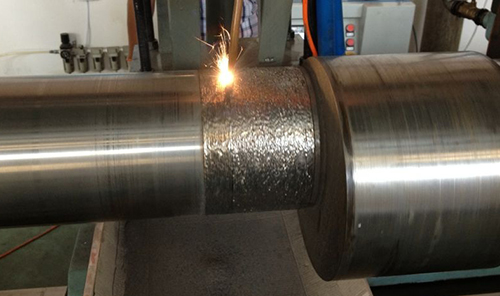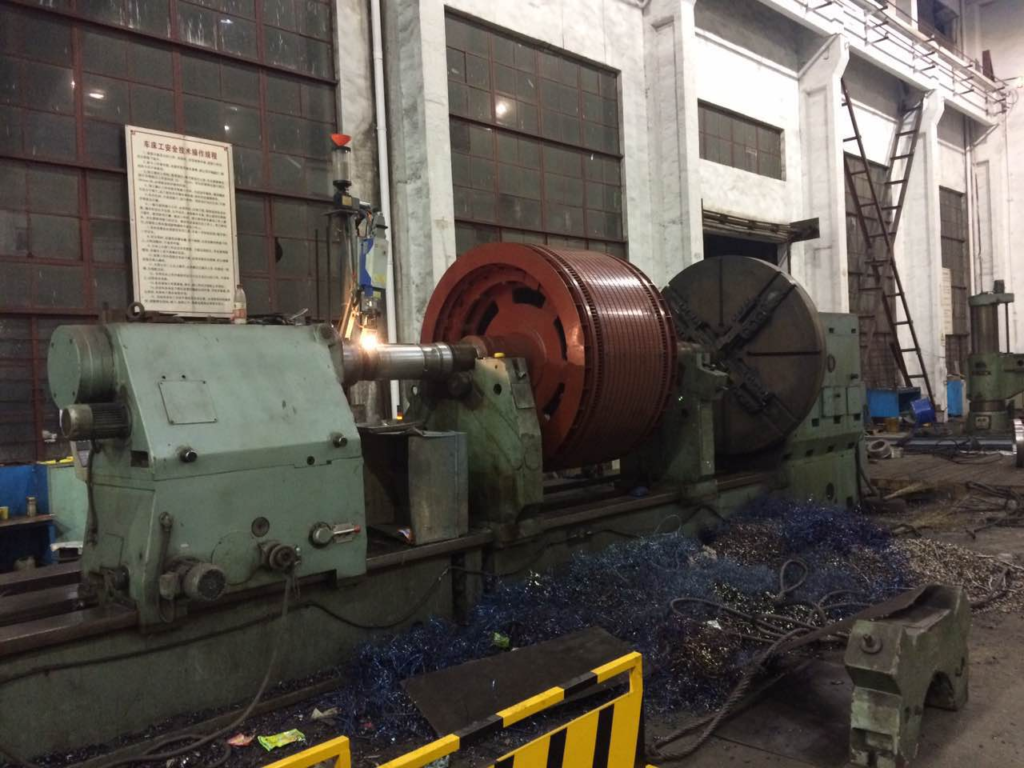
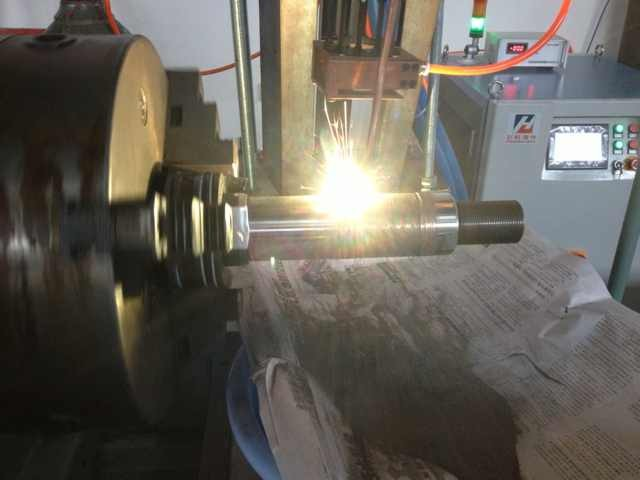
Technical Features of Laser Cladding Process:
- The laser cladding layer forms a dense metallurgical bond with the substrate, with high bonding strength and no peeling.
- The process has a small heat-affected zone and minimal thermal deformation, without changing the internal metallurgical properties of the base material.
- It enables customization of surface properties, allowing cladding of special functional layers such as wear-resistant, corrosion-resistant, and high-temperature-resistant coatings.
- Gradient functional cladding layers composed of a base layer, intermediate layer, and surface layer with different characteristics can be produced.
- A wide range of materials can be processed, including various steels, alloy steels, and cast iron.
- The process is automatically controlled, with short processing time and stable quality.
Technical Parameters of Laser Cladding Process:
Suitable materials: various steels, cast iron, stainless steel, etc.
Cladding hardness: HRC20–HRC70
Cladding thickness: single layer 0.5–1.2 mm, can be built up in multiple layers
Bonding strength: greater than 90% of the base material
Application Fields of Laser Cladding Process:
Laser cladding technology overcomes the limitations of traditional repair methods such as argon arc welding, thermal spraying, and plating, including material selection restrictions, thermal stress, thermal deformation, coarse grain structure, and difficulty in ensuring bonding strength with the substrate. It has been widely applied in industries such as shipbuilding, power generation, metallurgy, petrochemical, machinery, automotive, mold manufacturing, and hardware.
It is suitable for wear repair of core components in various types of high-precision equipment, including the following applications:
- Bearing positions (shaft journals) and bore wear of various rotating parts, such as turbine rotor shafts, gas compressor rotor shafts, large motor and generator shafts, and large rolling rolls.
- Surface wear and corrosion of various equipment.
- Bore wear and corrosion of gearboxes, gear housings, and similar equipment.
- Surface wear, scoring, corrosion, and cracks on crankshafts.
- Reciprocating working surfaces such as plungers and piston rods.
- Surface repair of various ball valve spheres.
- Surface repair of large molds.
- Surface repair of cast iron components.
- Repair of machining over-tolerance parts.